
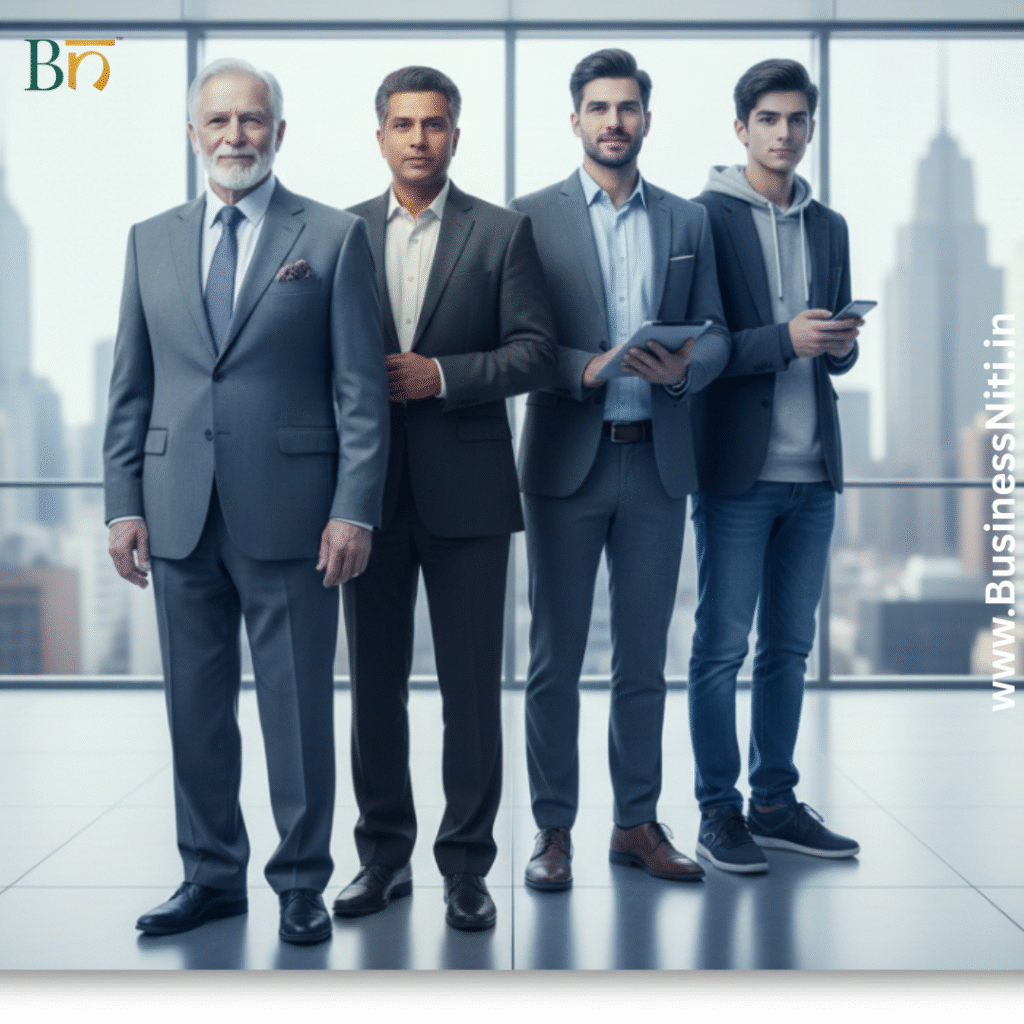
India built one of the world’s oldest continuous civilizations because every generation taught the next, one phase at a time. We respected अनुभव (experience) and उत्साह (youth) equally.
Usually, we believe in four phases of life, Brahmacharya, Grihastha, Vanprastha, and Sannyas and this become a powerful model for succession planning.
Brahmacharya – The Learning Years (Shadowing and Absorption)
In our ancient system, students didn’t “attend classes.” They lived with their Guru, learned by watching, by doing, by absorbing judgment as much as technique.
That’s exactly how Year One works.
The new talent becomes a shadow. Every meeting, every crisis, every tough call is a live classroom and the senior becomes a Guru, not a supervisor.
Grihastha – Taking the Wheel (Responsibility With Guidance)
Grihastha is the phase where one builds, experiments, contributes, and learns through action.
This is Year Two.
The fresh leader now takes the driver’s seat. They lead conversations, make decisions and run operations. But guidance is always available.
The senior works on special projects, much like how elders in a joint family advise but don’t interfere. When tricky situations came up, one call was enough to steady the ship. This phase builds courage backed by judgment.
Vanprastha – Independence With a Safety Net
Traditionally, Vanprastha wasn’t retirement. It was stepping back from daily duties while remaining a source of insight.
That’s Year Three. The successor is independent.
They handle crises, strategy, people issues, all on their own. But if something truly unprecedented happens, the senior is still available. It’s like knowing you can climb the mountain alone, but there’s a seasoned guide somewhere nearby if the weather turns. This phase completes the transfer of wisdom.
Sannyas – Full Ownership, Graceful Exit
In the final phase, the Guru steps back fully, having completed their duty. The Shishya becomes the Guru for the next generation.
Year Four is exactly that.
The new leader owns the role. They understand the culture, the cycles, the risks and the hidden nuances. The veteran may contribute to special assignments if they wish, but the leadership baton has truly passed. This is not about losing experience. It is about transforming it into a legacy.
This model combines energy and experience instead of choosing between them. Fresh talent brings– new ideas, digital fluency, speed and curiosity whereas Experienced talent brings – context, patterns, resilience and judgment. Together they create innovation that works in the real world.
You can search Google for information, but you cannot search Google for wisdom.
You can hire skills. You cannot hire judgment.
Our ancestors solved this centuries ago. Succession was never a handover. It was a journey. If your succession plan involves the outgoing employee creating a 100-slide PowerPoint titled “Everything You Need to Know” and then disappearing into the sunset… you don’t have a succession plan. You have a disaster waiting to happen.
So the next time you plan transitions, build a bridge between fresh minds and seasoned guides. Old trees give shade. New saplings bring renewal. Together they create a forest that lasts.