
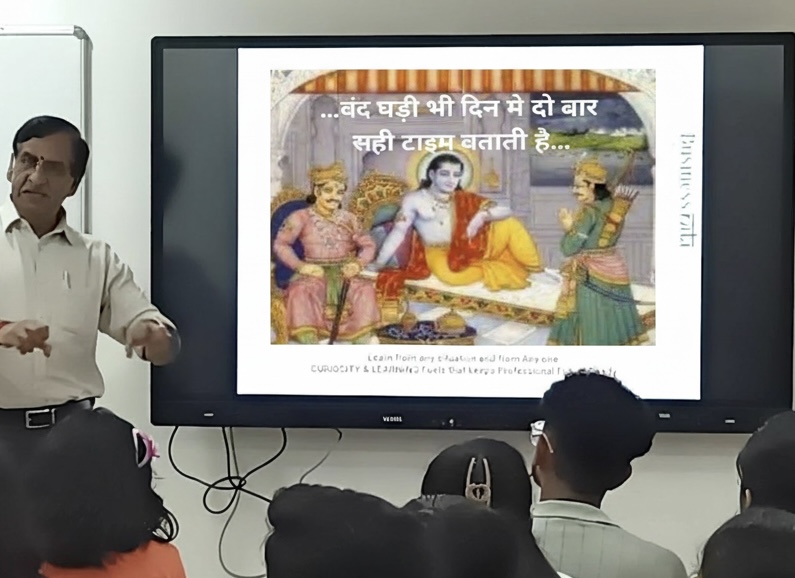
“बंद घड़ी भी दिन में दो बार सही समय देती है”
The Mahabharata is not just a story of war; it is a treasury of human behaviour. One small but powerful episode gives us a lesson that resonates deeply in today’s corporate life.
Before the Kurukshetra war, Arjun and Duryodhan both went to seek Krishna’s guidance. Krishn was resting when they arrived. After waking up and freshening up, he decided to test both of them. He gave each a simple exercise.
- To Arjun, he said: “Go into the world and find me one bad person.”
- To Duryodhan, he said: “Go into the world and find me one good person.”
Both went their ways, confident of their task. But after some time, both returned empty-handed.
- Arjun said: “I could not find anyone bad. Everyone had some goodness in them.”
- Duryodhan said: “I could not find anyone good. Everyone had some weakness in them.”
The task was the same, but the lens through which they looked at the world was different.
In organizations, leaders face a similar challenge. Every employee comes with strengths and weaknesses. What you choose to focus on determines the culture you build.
- A leader like Arjun sees potential, nurtures strengths, and brings out the best in people.
- A leader like Duryodhan sees only flaws, criticizes, and creates a culture of fear or mediocrity.
The truth is, no one is perfect. But leadership is about what we amplify in others.
- When we highlight strengths, people grow more confident and productive.
- When we only point at weaknesses, people shrink and disengage.
Every leader has to decide: will I be like Arjun or like Duryodhan?
The corporate battlefield is not about defeating colleagues, but about aligning their strengths to win together. Just as Krishna’s test revealed, what you see in others often reflects your own mindset.
Great leaders are not those who find fault, but those who find value.
The next time you assess your team, ask yourself: am I searching for weaknesses to point out, or strengths to build upon?
That answer alone could define the kind of culture you create.